Understanding LLMs and Multimodal AI: Generating Accurate Responses to Prompts
Rendered from an input.txt file.
Author: Ariel Wadyese x OpenAi Deep Research Mode
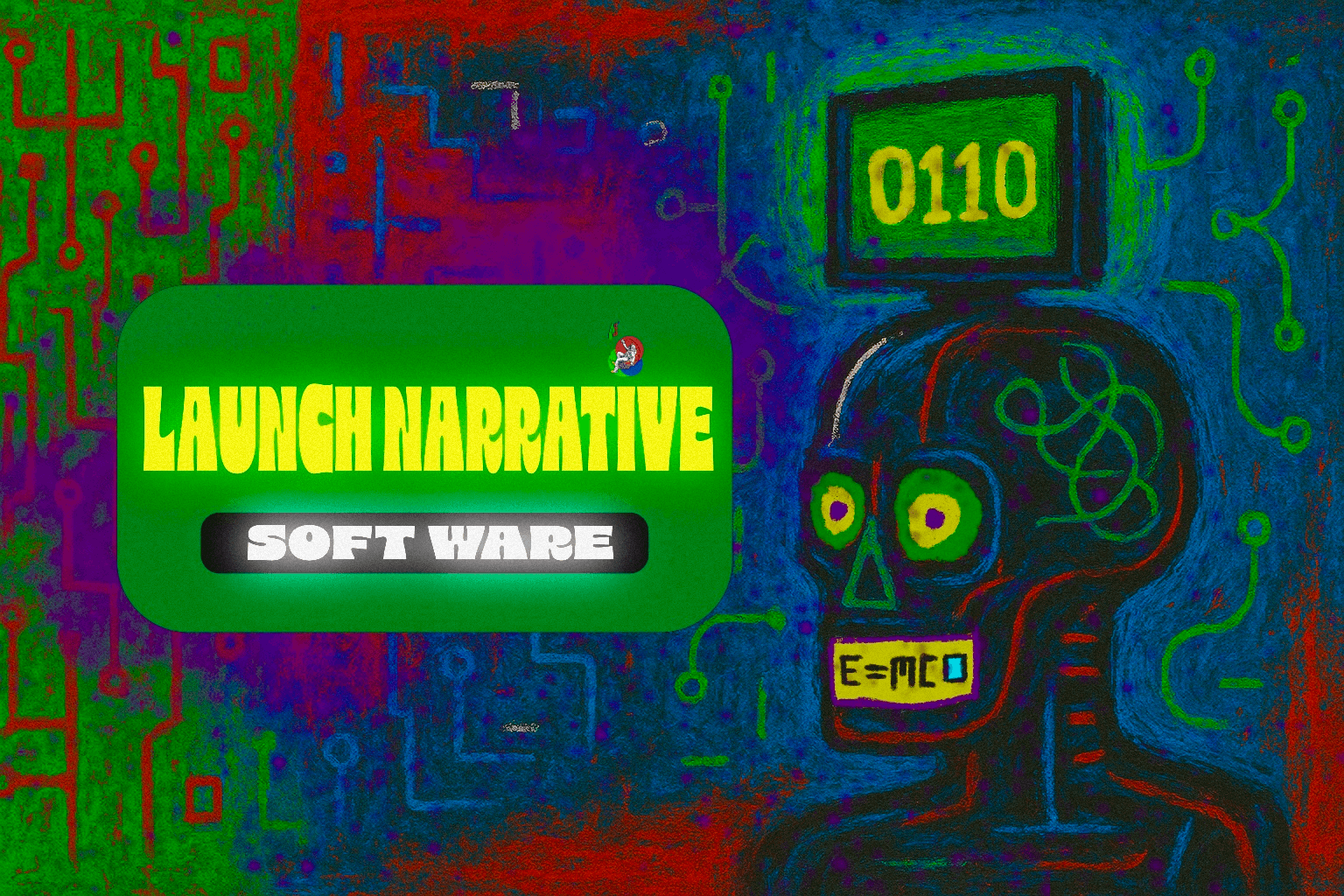
Generate me a Hero Image i can use for my website that explains how multimodal ai works, make it an abstract painting inspired by Jean-Michel Basquiat, coloured red green and blue, inspired by technology
Audio for all the sections in the article can pe played and downloaded using the table below: [Table allows horizontal scrolling on mobile devices]
| Name | Audio | Download |
|---|---|---|
| 1. Understanding LLMs and Multimodal AI | ||
| 2. Processing Text Prompts with Transformers (Tokenization, Embeddings & Attention) | ||
| 3. Training LLMs: From Massive Datasets to Fine-Tuning and RLHF | ||
| 4. How LLMs Achieve Accuracy and Relevance in Responses | ||
| 5. From Unimodal to Multimodal: Integrating Text, Images, Audio, and More | ||
| 6. Generative AI Across Modalities: Examples | ||
| 7. Conclusion |
Large Language Models (LLMs) and newer multimodal AI systems have revolutionized how we interact with machines, producing remarkably accurate and context-aware responses from prompts. This report provides a comprehensive technical overview of how these systems work, aimed at developers. We’ll cover how LLMs process text prompts (tokenization, embeddings, attention, transformer architecture), the training and fine-tuning process (including RLHF and evaluation), how models achieve accuracy and relevance, the transition from text-only to multimodal models, and examples of generative AI across different modalities (text, images, audio/music, video, and code). Clear explanations and diagrams are included to illustrate key concepts.
At the core of an LLM is the Transformer architecture. When a user inputs a text prompt, the model first performs tokenization – breaking the text into discrete units called tokens (which may be words or subword pieces). Each token is then mapped to a numeric embedding vector. In essence, text is converted into numerical representations (tokens), and each token is looked up in an embedding table to yield a dense vector that captures its meaning. These token embeddings (plus special positional encodings indicating the token positions in the sequence) form the input to the Transformer network.
Multi-Head Self-Attention: Transformers process tokens in parallel and use an attention mechanism to let the model learn dependencies between tokens. Each Transformer layer uses self-attention to contextualize each token with respect to all other tokens in the prompt. The idea is that for each token (as a query), the model computes attention scores against every other token (keys), then aggregates information from those tokens (values) weighted by these scores. This way, the model can “attend to” important words in the prompt that inform the meaning of the current word. Importantly, this happens for multiple attention heads in parallel (multi-head attention), allowing the model to capture different types of relationships (syntax, semantic relations, etc.) simultaneously. Tokens that are highly relevant to each other (e.g. a pronoun and its antecedent, or a verb and its object) will have higher attention weights, effectively drawing those word representations together in the model’s intermediate computations. Less relevant tokens get lower weights, so the model focuses on the most pertinent parts of the input. This attention-driven context mixing is what enables LLMs to handle long-range dependencies and understand the prompt as a whole, rather than just one word at a time.
Transformer Architecture: The Transformer is built from repeating layers (blocks) that each contain a multi-head attention sub-layer and a feed-forward neural network sub-layer, with residual connections and normalization around them for stability . The original Transformer design included an encoder–decoder structure (useful for tasks like translation), but many LLMs (like GPT series) use just the decoder component in an autoregressive fashion. The decoder takes the input context and generates output text one token at a time, using masked self-attention so that each position can only attend to earlier positions (ensuring the model doesn’t “peek” at future tokens when generating). Feed-forward networks after the attention layer transform and refine the attended representations for each token. These are simple multilayer perceptrons applied to each position, which allow the model to mix the information gathered by attention and apply nonlinear transformations. Stacking multiple Transformer layers creates a deep network that successively builds up higher-level representations of the sequence. By the final layers, the model has an embedding for each position that encodes the meaning of that token in context of the entire prompt. Figure: The Transformer architecture, consisting of an encoder (left) and decoder (right) stack. Each layer applies multi-head self-attention (to weight relationships between tokens) followed by feed-forward neural networks, with skip-connections and layer normalization (not shown) to stabilize training. The input text is first tokenized and converted to embedding vectors, and positional encodings are added to inject sequence order information. Transformers process tokens in parallel, using attention to contextualize each token with respect to the whole sequence. This allows capturing long-range dependencies and meaning without relying on recurrence. In large language models (e.g. GPT), a decoder-only Transformer is often used to autoregressively generate text, leveraging the same attention mechanism to attend to the prompt (and previously generated tokens) for each next-token prediction .
Example – Attention in Action: Suppose the prompt is “The programmer put the book on the table because it was old.” Through self-attention, when the model processes the token “it”, it can attend strongly to “the book” (disambiguating what “it” refers to) and also consider adjectives like “old” that appear later, thereby understanding that “it” likely means the book. This ability to dynamically adjust which parts of the input to focus on for each token is what makes Transformers so powerful at capturing context. The model learns these attention patterns from training data – e.g., learning to attend to relevant nouns for pronouns, or to previous parts of a question when answering it.
In summary, LLMs interpret a text prompt by encoding it into vectors and passing those through layers of attention and transformations. The final output of this process (often through a softmax over the vocabulary at the decoder’s end) is used to generate a probability distribution for the next token, allowing the model to sequentially produce an answer word-by-word. The Transformer’s parallel processing and attention-driven contextualization are key to how LLMs handle complex prompts and generate coherent, relevant responses.
Large language models achieve their capabilities by undergoing extensive training in two main stages: (1) Pre-training on very large datasets to learn general language patterns, and (2) Fine-tuning/Alignment on narrower data or with human feedback to hone the model’s behavior and accuracy for specific tasks.
Pre-training on Massive Corpora: LLMs are first trained in a self-supervised manner on vast amounts of text. The model learns to predict the next token in a sequence, which forces it to absorb grammar, facts, and reasoning skills from the data. For example, GPT-3 was trained on an estimated 45 terabytes of text data drawn from internet sources like Common Crawl, Wikipedia, books, and other documents. This immense dataset (hundreds of billions of words) provides coverage of diverse topics and linguistic contexts. During pre-training, no explicit labels are needed; the model simply learns to minimize the difference between its predicted next words and the actual next words in the training text (the cross-entropy loss). By the end of this phase, the model has acquired a broad statistical understanding of language: how words relate, how sentences are structured, and even a lot of factual or commonsense knowledge implicitly stored in its weights.
However, a raw pre-trained model may not reliably follow user instructions or produce helpful outputs. Its objective was just next-word prediction, which doesn’t necessarily align with being factual, harmless, or on-topic. This is where fine-tuning and alignment processes come in.
Supervised Fine-Tuning (SFT): After pre-training, an LLM is often fine-tuned on curated datasets for specific behavior. In supervised fine-tuning, developers prepare example prompts with high-quality target responses (often written by human experts). The model is then trained to map those prompts to the given responses (a supervised learning setup). For instance, with instruction-tuning, the model is fine-tuned on prompt-response pairs designed to teach it to follow instructions or have dialogues. OpenAI’s ChatGPT, for example, was initialized from a GPT-3.5 model and fine-tuned on demonstrations of dialogue where human AI-trainers played both user and assistant, showing the model how to answer questions, ask clarifications, etc.. This step teaches the model desired style and context-awareness – e.g., to be polite, to say “I don’t know” rather than making up an answer, to format answers helpfully, and so on. Fine-tuning on specific domains is also common (e.g., a biomedical LLM fine-tuned on medical text). The result of supervised fine-tuning is a model that is better aligned with the tasks or behaviors we want, but it may still not be perfect. It might still produce errors or unwanted outputs that weren’t well-covered in the fine-tuning data.
Reinforcement Learning from Human Feedback (RLHF): To further align the model’s behavior with what users expect (and avoid undesirable outputs), RLHF is used. This process turns qualitative human preferences into a reward signal to directly optimize the model’s responses. The typical RLHF pipeline has three steps:
Figure: A three-step RLHF fine-tuning process used to align language models (such as ChatGPT) with human intent. (1) Supervised Fine-Tuning (SFT): Starting from the pre-trained model, humans craft example conversations or instructions and ideal responses; the model is fine-tuned on this data to better follow prompts. (2) Reward Model Training (RM): Humans then rank multiple outputs from the model for various prompts by preference. A reward model is trained on these rankings to predict a higher score for preferable outputs. (3) Policy Optimization (RL): The base model is further tuned using a reinforcement learning algorithm (e.g. PPO), generating outputs and receiving reward signals from the reward model, and adjusting its parameters to produce responses that maximize the learned reward. Through RLHF, the model learns to prefer responses that humans would rate as good, which greatly improves the helpfulness, accuracy, and safety of its answers.
- Collect Human Feedback on Model Outputs: First, you gather a dataset of model responses ranked by quality. The fine-tuned model is prompted in various ways to produce multiple different answers. Human evaluators (labelers) then rank these answers from best to worst according to criteria like correctness, helpfulness, completeness, and absence of harmful content. For example, given a prompt, the model might generate 4 different completions, and a human might rank them 1 through 4.
- Train a Reward Model (RM): Using the ranked outputs, train a separate model (or an additional head on the LLM) to predict a reward score from a prompt and a candidate response. This reward model is trained such that it outputs higher scores for responses that humans ranked higher. Essentially, it learns to mimic the human preference judgments. The reward model provides a way to automatically evaluate the quality of new model outputs without a human in the loop each time.
- Fine-Tune the LLM with Reinforcement Learning (Policy Optimization): Now, treat the LLM as a policy (a function that, given a prompt state, produces an action – the next token). Using an RL algorithm (often Proximal Policy Optimization, PPO), update the LLM’s weights to maximize the reward model’s score for its outputs. The model generates outputs, the reward model scores them, and the policy is adjusted to prefer actions that yield higher reward. During this process, techniques like proximal updates are used to ensure the model’s behavior doesn’t deviate too wildly from its pre-trained distribution (to avoid nonsense outputs). After multiple iterations, the LLM is optimized to produce answers that align better with human preferences.
This RLHF procedure was critical in making ChatGPT produce more factual and polite responses compared to its predecessor. For example, a pre-trained model might output an answer that sounds plausible but is subtly incorrect, or might follow a prompt’s literal request even if it’s harmful. After RLHF, the model is more likely to refuse inappropriate requests and more likely to double-check factual queries (as judged by human raters). In essence, RLHF injects a layer of human judgment into the training loop, guiding the model toward what we consider high-quality answers. This significantly improves the alignment of LLM responses with user needs and human values.
Model Evaluation: Throughout training, developers evaluate LLMs using both automated metrics and human evaluation. During pre-training, a common metric is perplexity (or equivalently cross-entropy loss) on a validation set – essentially measuring how well the model predicts unseen text. A lower perplexity indicates the model has learned more of the language structure. However, perplexity doesn’t directly tell us if a model’s answers are useful or accurate for end-users. For that, benchmarks and targeted tests are used. LLMs are evaluated on tasks like question-answering, summarization, or code generation benchmarks to gauge their capabilities. After fine-tuning, companies often conduct human evals: showing a sample of model outputs to human reviewers who rate them on criteria like correctness, relevance, coherence, and safety. For instance, OpenAI measured that instruct-tuned and RLHF-tuned models were rated significantly more helpful and truthful by humans than the base GPT-3 model. Model evaluation also includes specific stress tests (e.g., “red teaming” prompts to elicit bad behavior and see how the model handles them) and comparative evaluations against other state-of-the-art models.
It’s worth noting that achieving high accuracy and relevance is an ongoing challenge. Even aligned models can occasionally produce hallucinations (plausible-sounding but incorrect facts) or misunderstand a prompt. Techniques like iterative refinement (the model can be prompted to check or explain its answer), or tool use (the model calls external knowledge bases), are being explored to further improve factual accuracy. Nonetheless, the combination of large-scale pre-training and human-guided fine-tuning (RLHF) currently represents the state of the art for training AI systems that respond accurately and helpfully to prompts.
Achieving accurate and relevant responses is a result of both the model’s architecture and its training regimen. Some key factors that contribute to an LLM’s quality of answers:
- Attention and Long-Context Reasoning: As discussed, the self-attention mechanism allows the model to consider all parts of the prompt when formulating an answer. This means it can integrate relevant details from the prompt (or prior conversation) to stay on topic. The Transformer’s ability to handle long sequences (with context windows that can be thousands of tokens) helps the model remember earlier statements or details in a conversation, leading to more relevant and coherent responses. For example, in a coding assistant scenario, if the user described a function in an earlier message, the model can refer back to that description when writing code in a later message – something that wouldn’t be possible without long-range attention.
- Scale of the Model: Larger models (with more parameters and trained on more data) tend to be more accurate. Scaling up has been empirically shown to improve performance on a wide range of tasks. Intuitively, a larger network with more training data can capture subtler patterns and more facts. GPT-3 (175B parameters) was notably more fluent and knowledgeable than GPT-2 (1.5B) because it could absorb more information from its huge training set. This means when you ask a question, there’s a higher chance some relevant knowledge was in the training data and encoded in the weights. That said, large size alone isn’t enough – it must be paired with alignment techniques to ensure the knowledge is correctly applied.
- Training Data Quality and Diversity: Accuracy depends on what the model has seen during training. High-quality, diverse training data means the model has examples to learn from for many possible user questions. If the training data contains correct information about a topic, the model is more likely to give a correct answer. Conversely, biases or gaps in training data can lead to errors or less relevant answers for certain inputs. Ensuring a wide coverage of topics (and filtering out misinformation during preprocessing if possible) can improve factual accuracy. Some LLM developers augment training with data from knowledge bases or perform post-training knowledge injections to update facts, though this is an active area of research (to reduce hallucinations).
- Instruction Fine-Tuning & Human Feedback: The fine-tuning steps (supervised and RLHF) are explicitly designed to boost relevance and correctness. During instruction tuning, human-written correct answers teach the model what kinds of answers are expected. With RLHF, if the model produces an irrelevant or incorrect answer, human rankers will rank it low, and the reward model will assign it a low score, which in turn trains the policy to avoid such outputs. For example, if a prompt asks for a definition of a technical term, and the model gives an off-topic response, humans would mark it down. The model learns to favor answers that stick to the question and provide the requested info. Over many iterations, this greatly sharpens the relevance of responses. OpenAI reported that their aligned models (like InstructGPT) were preferred by users over the same size base model’s outputs in the vast majority of comparisons, largely due to being more on-point and correct.
- Evaluation and Iteration: Finally, developers continuously evaluate the model on query sets and user feedback, identifying where it makes mistakes. They can then update the training process or add targeted data for those cases (a bit like teaching a student in areas they got wrong). This iterative refinement – sometimes called feedback-driven training – helps close the gaps in accuracy and relevance over time. For instance, if users find the model often errs on medical questions, the developers might fine-tune it on a medical Q&A dataset or adjust the reward model to emphasize factual correctness more in that domain.
In summary, LLMs achieve accuracy through a combination of architecture (the ability to attend to relevant context), scale and data (learning vast amounts of information), and alignment training (directly optimizing for human-preferred, relevant, correct responses). The transition from a raw predictive model to a refined assistant involves making the model not just smart, but also tuned to what users consider a good and relevant answer.
Early AI models and LLMs were unimodal, typically specializing in one type of data (modality) – e.g. text-only. A modality refers to a form of data like text, images (vision), audio (sound/speech/music), video (vision+time), or code. Humans experience the world in multiple modalities simultaneously, and next-generation AI systems are heading the same way. Multimodal models are those that can process and generate multiple types of data, allowing richer interactions (like describing an image, or answering questions about a video).
Extending Transformers to Other Modalities: A remarkable aspect of the Transformer architecture is that it’s quite general – it deals with sequences of vectors, which need not be words. Researchers have successfully applied transformers to images, audio, and more by finding appropriate ways to tokenize those modalities. For example, in vision, a popular approach is the Vision Transformer (ViT) which splits an image into a sequence of patches (e.g. 16×16 pixel patches) and then linearly embeds those into vectors. The sequence of image patch vectors is fed into a transformer just like word embeddings are for text. The transformer then uses attention to learn relationships between parts of the image. This allows purely transformer-based image models. Similarly for audio, one can convert an audio waveform or spectrogram into a sequence of frames or coefficients and use a transformer to model temporal patterns (this is done in models like Whisper for speech recognition).
Multimodal Fusion Architectures: The challenge in multimodal models is to combine different data types which have very different structures (an image is 2D pixels, text is 1D sequence of words, etc.) into a unified understanding. Several architectural strategies exist:
- Separate Encoders with Late Fusion: Each modality is processed with its own encoder network to produce a semantic embedding, and then those embeddings are combined. For instance, an image encoder (like a CNN or ViT) produces an image feature vector, while a text encoder (transformer) produces a text vector; then the model might concatenate or otherwise fuse these vectors for a joint prediction. This is the approach used by CLIP (Contrastive Language-Image Pretraining), where an image encoder and a text encoder are trained jointly such that their embeddings for matching image-caption pairs are pulled together in vector space. After training, CLIP can align text and images – e.g. you can give a text prompt “a dog on a beach” and CLIP can find which image (from a set) has features most cosine-similar to that text embedding, enabling zero-shot image classification or retrieval. Separate encoders are nice because they allow using architecture specialized for each modality (e.g. convolutional networks for images, transformers for text) and are modular – one can swap in a better image encoder later, etc.. However, the fusion is late (after encoding), meaning the model might not capture fine-grained interactions between modalities until the very end.
- Unified Multimodal Transformer: Another approach is to feed data from all modalities into one transformer. This requires a way to serialize multimodal data together. One method is to insert special token types or markers to indicate modality boundaries in a single sequence. For example, a model input might be: [ImagePatch1][ImagePatch2]... [ImagePatchN][SEP][Word1][Word2]... etc., and the transformer will attend over the combined sequence. The model can learn to attend across modalities (e.g., relating a word to a part of an image) within its layers. Google’s ViLT (Vision-and-Language Transformer) follows this pattern, using a single transformer for vision-language tasks. Another example is in some implementations of GPT-4-style multimodal models, where an image is encoded as a sequence of vectors that are fed into the same model alongside text tokens, enabling the model to discuss the image. Unified transformers allow early fusion – text and image (or other modalities) can interact at every layer, potentially leading to deeper cross-modal understanding (like referring to image regions when generating text descriptions). The downside is they typically require more computation and careful training to not let one modality overwhelm the attention.
- Cross-Attention (Encoder–Decoder Fusion): This is common in scenarios like image captioning or text-to-image generation. One modality is processed by an encoder, and then the decoder attends to that encoder’s output while generating the other modality. For instance, in image captioning, an image encoder produces feature maps and a text decoder transformer uses cross-attention to query those image features as it generates each word (attending to parts of the image when choosing the next word). In text-to-image generation (like DALL·E or Stable Diffusion’s text encoder + image decoder design), a text encoder creates a context that a decoder or diffusion model uses to produce an image. Cross-attention provides a directed way for one modality to influence the other (e.g., “look at this image and describe it in text” or vice versa).
These designs are not mutually exclusive – many systems use hybrids. For example, a multimodal conversational agent might have an image encoder feeding into a text-based LLM via cross-attention, and maybe also an audio transcriber feeding in text, etc.
Training Multimodal Models: Training data for multimodal models usually consists of paired data – e.g. images with captions, videos with narration, audio with transcripts, code with comments. Models like CLIP and ALIGN were trained on hundreds of millions of image-text pairs scraped from the internet. By learning to align or translate between modalities, the model builds a joint representation. A practical example: image question answering – the model can take both an image and a question about it as input, then produce an answer. During training, it needs datasets where questions about images and their correct answers are available (like VQA datasets). Multimodal models often optimize multiple objectives (a contrastive loss, plus maybe a generative loss) to ensure they can both understand and produce multimodal outputs.
Capabilities of Multimodal Systems: A well-designed multimodal model can transfer knowledge between modalities. For example, it can combine visual context with language – “see” something in an image and “explain” it in words. Some capabilities of current multimodal AI include: describing images in detail, answering questions about an image (e.g., “How many people are in this photo?”), converting text instructions to images (generative art), performing speech recognition or speech-to-text, text-to-speech (reading text in a natural voice), and even controlling robotics through vision+language (e.g., “pick up the red object on the left”). More novel modalities like code can be seen as just another type of text (and indeed code LLMs exist), but one can also imagine combining code with other modalities (e.g., a model that takes a diagram image and generates code, etc.).
Multimodal models thus represent a convergence of what were once separate AI domains. By aligning text, images, audio, video, and other data into a shared representational space, these models can unlock powerful use cases – like a single AI that can see, listen, and speak: e.g. you show it a chart and ask a question in speech, it transcribes your speech to text, processes the chart image and question together, and then generates a spoken answer. We are already seeing early versions of such systems.
Of course, multimodal AI also brings challenges: the models tend to be even larger and more data-hungry. It’s harder to get high-quality paired data for every modality (e.g., video with detailed text descriptions is rarer than plain text). The computational cost can be enormous, since e.g. processing high-res images or long videos in a transformer requires a lot of memory (some research mitigates this with techniques like patching and sparse attention, or using pretrained uni-modal backbones). Despite these challenges, rapid progress is being made. For example, OpenAI’s GPT-4 is reported to accept image inputs as well as text, demonstrating advanced multimodal reasoning like explaining memes or interpreting graphs from an image prompt.
Modern AI models can generate a variety of outputs from prompts, not just text. Below are several examples of how state-of-the-art systems generate different modalities of content:
- Text-to-Image Generation: Given a textual description, AI models can create novel images matching the prompt. For instance, OpenAI’s DALL·E model (2021) is a 12-billion parameter Transformer (a variant of GPT-3) trained on image-text pairs, capable of producing original images from captions. DALL·E can generate fantastical imagery (“an illustration of a baby daikon radish in a tutu walking a dog”) by combining concepts, attributes, and styles described in text. More recently, diffusion models have become popular for text-to-image generation – examples include Stable Diffusion and Google’s Imagen. These models are trained on hundreds of millions of image-caption pairs and learn to gradually generate images that align with a text prompt by refining random noise into a coherent picture. They can produce photorealistic results or artistic styles as requested. Such text-to-image models have demonstrated the ability to combine unrelated concepts (because they learned a wide range of visual representations and how language describes them) and even render text in images or perform simple spatial reasoning in the scene. The accuracy of the output relative to the prompt is often striking – e.g., if you ask for “a red cube on top of a blue sphere”, the model attempts to correctly place and color the objects as described. These systems are evaluated by how well the generated images match the prompt (assessed by humans or by similarity to embeddings from models like CLIP).
- Text-to-Music and Audio: Generating music or other audio from text is an emerging capability. OpenAI’s Jukebox (2020) was an early example of music generation from text descriptions. Jukebox takes a genre, artist style, and even raw lyrics as input, and produces a continuation or new song in that style – complete with instrumentals and singing. It does this by using a multi-stage VQ-VAE (vector quantized autoencoder) to compress audio into discrete codes, and then a transformer to generate those codes from the prompt (lyrics/genre). For example, given the lyrics of a blues song in the style of B.B. King, Jukebox can produce a few minutes of audio that resemble a blues track with guitar and vocals following those lyrics. The coherence was rudimentary, but it showed the potential of prompt-based music generation. More recently, Google introduced MusicLM (2023), which generates high-fidelity music from rich text prompts like “a calming violin melody backed by a distorted guitar riff”. MusicLM uses a hierarchical sequence-to-sequence model that first generates a coarse sequence of musical features from the text, then refines it to an audio waveform. It can produce multi-minute pieces that follow the description closely (for instance, if asked for “techno music with a strong bass and some bird chirping sounds”, it will attempt to incorporate those elements). These models are trained on audio examples with captions or paired metadata. Text-to-audio isn’t limited to music; there are also text-to-speech models (like Tacotron, VALL-E, etc.) that generate spoken voice from text, and text-to-sound effect models (e.g., generate an audio of “footsteps on wooden floor”). As generative AI improves, we even see multimodal combos – e.g., a model like Phenaki has been proposed to generate music that aligns with a given video, etc. Music and audio generation models are evaluated by human listeners for qualities like audio fidelity and how well they matched the prompt description.
- Text-to-Video Synthesis: Video generation from text is extremely challenging (since video is essentially many images plus temporal consistency), but progress is being made. In 2022, Meta AI unveiled Make-A-Video, a system that generates short (several-second) video clips from a text prompt. For example, given “a dog wearing a superhero cape flying through the sky,” it produces a brief video of a flying dog. Make-A-Video builds on image generation models: it uses a pretrained text-to-image model to generate an initial frame, then a temporal model to expand it into a sequence of frames, and finally super-resolves those frames. What’s notable is that it didn’t require explicit text-video pairs for training; it leveraged image-text data for scene content and unlabeled video data to learn motion dynamics. Likewise, Google’s research prototype Imagen Video and others like Phenaki have shown the ability to create simple animated scenes or camera pans from prompts. These videos are usually only a few seconds long and low-resolution, and complex prompts can lead to weird results (video synthesis is still in early days). But they demonstrate the potential of multimodal generation: the model has to learn what motions or transitions likely correspond to the described scene. Evaluation of text-to-video is often done via user studies, since automated metrics are hard – asking humans “does this video match the prompt?” and “is it coherent?”. Another angle is video-as-multi-modal: some models take image + text to generate video (animating a given image per a prompt). This is evolving quickly, and we expect more robust video generation (longer duration, higher quality) as models and hardware improve.
- Code Generation: AI models can also generate source code from natural language prompts, essentially treating code as a language (with its own syntax and patterns). OpenAI Codex is a prime example – it’s a version of GPT-3 fine-tuned on billions of lines of code from GitHub (in dozens of programming languages, with a focus on Python) . Given a prompt like “# Python function to compute the moving average of a list of numbers”, Codex can produce the function code below it. It powers GitHub’s Copilot, an IDE assistant that autocompletes code and suggests implementations based on comments or partial code. These code generation models work by learning from the huge corpus of existing code how to complete code in context or implement functionality described in comments/docstrings. They use the same transformer architecture; tokenization for code might treat individual characters or sub-tokens specially (to handle indentations, punctuation, etc.). The impressive part is that they not only regurgitate memorized code, but can synthesize new code for novel tasks by composing programming knowledge learned during training. For instance, if asked to “sort a list of (name, score) tuples by score descending”, the model can generate a Python snippet using sorted(..., key=lambda x: x[1], reverse=True) even if that exact snippet wasn’t seen, because it knows sorting, lambda syntax, and how to access tuple elements from various training examples. Code models are evaluated on benchmarks like HumanEval (which gives a spec and tests the generated code against unit tests). Current models can solve a substantial portion of competitive programming problems or leetCode-style challenges. Beyond generating new code, they can translate between programming languages or help explain code. Code generation is considered a modality here because while it’s text, it has a different structure and purpose; specialized models like Codex or open-source StarCoder are tuned to the structure of code and the needs of developers.
These examples scratch the surface of generative AI’s multi-modal capabilities. Other notable mentions include text-to-3D model generation (e.g., models that create 3D object meshes from a description), image-to-image generation (transforming an input image based on a prompt, like style transfer or image inpainting guided by text), audio-to-text and text-to-audio (speech recognition and synthesis which are well-established), and even multimodal interactions (like conversational agents that can see and talk). The trend is that models are becoming more holistic – leveraging the same underlying AI principles (transformers, large-scale training, diffusion, etc.) across different forms of data.
Each of these modalities poses unique challenges (e.g., ensuring an image is photorealistic, or that generated code is syntactically correct and runs without errors). Yet, the general recipe that made LLMs successful – large neural architectures + huge training data + clever training objectives + human feedback – has proven remarkably adaptable to images, audio, and more.
AI systems like large language models have achieved an impressive ability to interpret text prompts and generate accurate, relevant responses thanks to the powerful Transformer architecture and extensive training/finetuning processes. They tokenize input text and encode it into high-dimensional embeddings, then use multi-head attention in Transformer layers to capture the prompt’s context and meaning. During generation, the model uses this contextual understanding to predict likely continuations or answers, one token at a time, resulting in coherent output.
The training regime – from massive pre-training datasets to alignment with human preferences via RLHF – is critical in shaping a model that is not only knowledgeable, but also aligned with what users consider correct and helpful. Techniques like supervised fine-tuning on expert demonstrations and reinforcement learning from human feedback imbue the model with improved accuracy, relevance, and adherence to instructions, far beyond what unsupervised training alone could accomplish. Evaluation and iterative refinement further ensure the model’s responses remain on track and continuously improve.
Finally, we are witnessing the evolution from text-only models to multimodal AI, where systems can handle images, audio, video, and more alongside text. By integrating multiple data modalities, either through separate learned encoders or unified architectures, AI models gain a richer understanding of context and can generate diverse outputs – from writing code to creating images and music based on natural language prompts. This opens up new possibilities for applications: imagine a single AI agent that a developer can ask in plain English to “Generate a diagram of this circuit and provide the Python code to simulate it” – and it can do both. The examples of DALL·E, MusicLM, Make-A-Video, Codex and others illustrate that this is no longer science fiction, but an active area of development.
For developers, understanding these mechanisms – tokenization, embeddings, the transformer’s attention, the significance of training data and fine-tuning – is crucial to effectively harnessing AI models or building upon them. As AI systems continue to improve, we expect even more accuracy, more modalities, and more seamless integration between different types of data. The principles described here will remain foundational: representing data as high-dimensional vectors, learning patterns through massive computation, and aligning model outputs with human intent. By combining these, AI models turn simple prompts into remarkably sophisticated and accurate responses across a wide range of tasks and modalities, marking a significant leap in how computers can assist and augment human work.
Sources: The information and examples above were drawn from a range of technical sources, including research papers, technical blog posts, and documentation of state-of-the-art models, to ensure an accurate and up-to-date description of how modern LLMs and multimodal models function. Key references include the original Transformer paper “Attention is All You Need” and explanatory resources on it, OpenAI’s descriptions of GPT-3, Codex, DALL·E and CLIP , Google’s research publications on MusicLM and multimodal Transformers, and detailed blogs on the RLHF process used in ChatGPT, among others. These provide the foundation for understanding the inner workings of generative AI systems as summarized in this report.